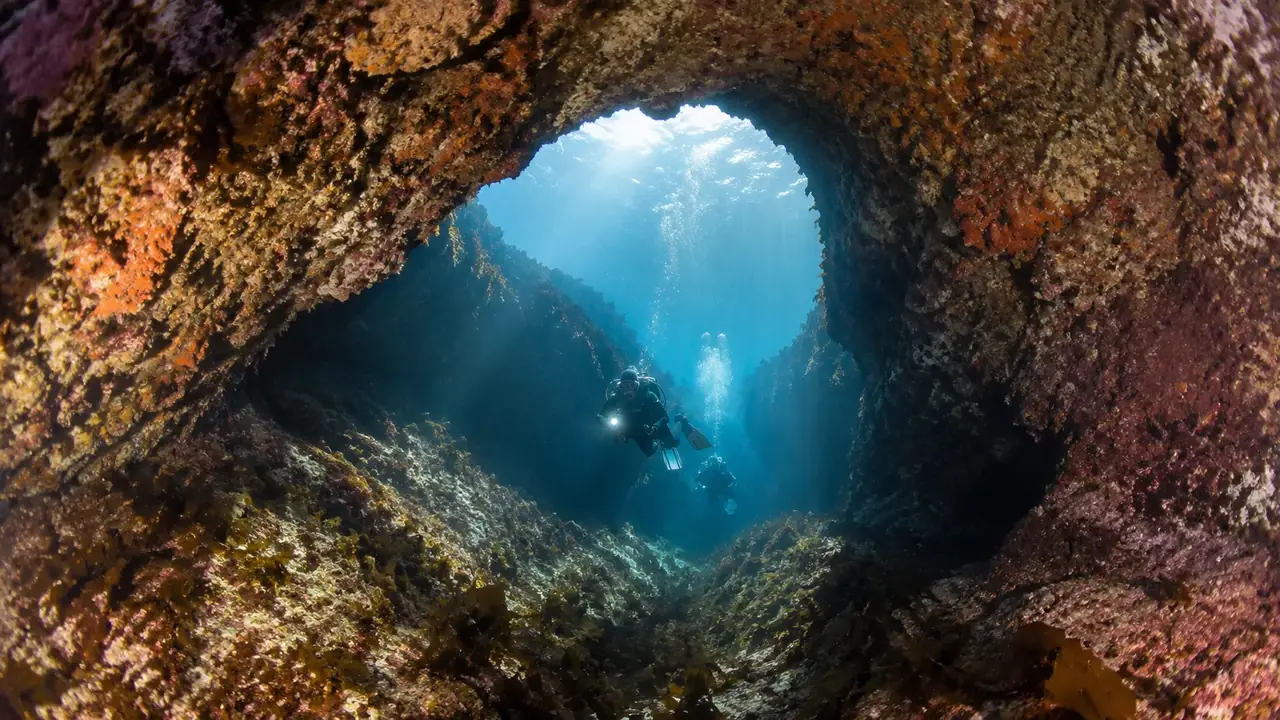
2 destinations offering cave & cavern dives
Cave and cavern diving explores overhead environments from cenotes to swim-throughs. Cavern diving stays within the daylight zone accessible to recreational divers, while full cave diving demands dedicated training. Crystal-clear freshwater and dramatic light beams make these dives unforgettable.
2
Destinations
25m
Avg Visibility
23°C
Avg Water Temp
4.6
Avg Rating
Side-by-side comparison of every cave & cavern destination we cover - visibility, temperature, cost, and season.
| Destination | Rating | Visibility | Temp | Cost/day | Best months | Difficulty |
|---|---|---|---|---|---|---|
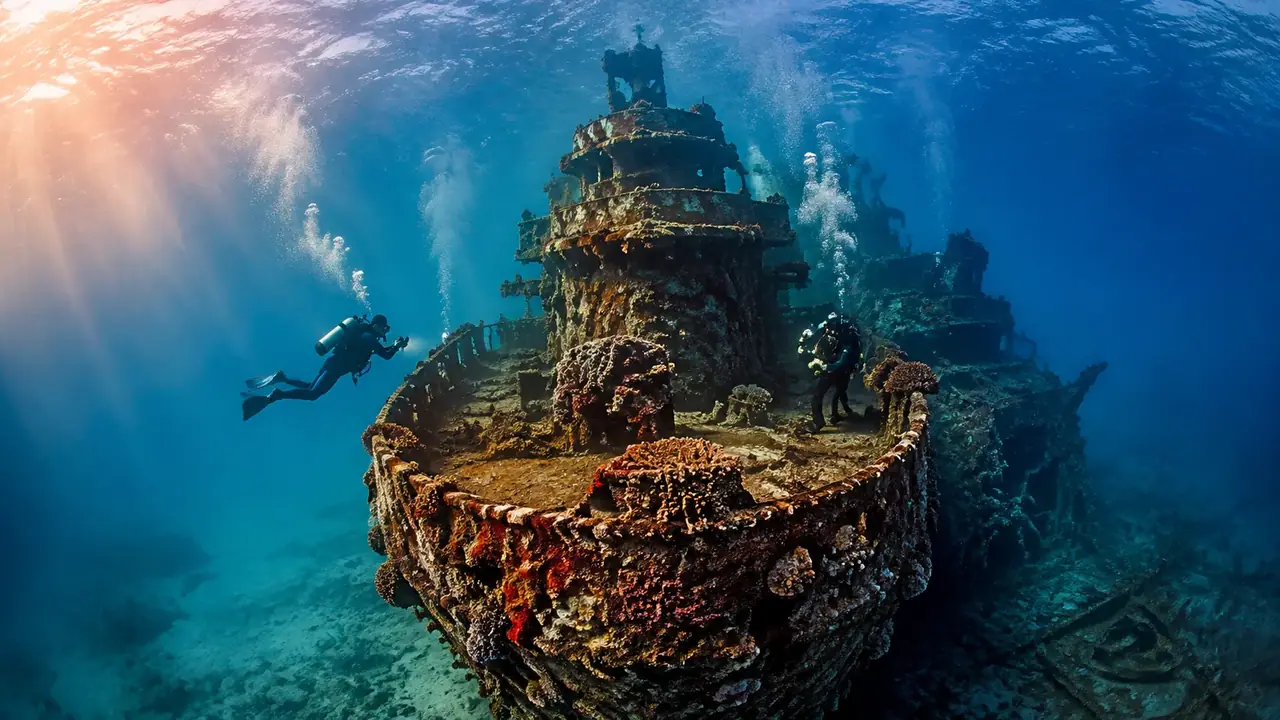
| Chuuk Lagoon | 4.7/5 | 25m | 28°C | $200 | Dec, Jan, Feb, Mar, Apr | advanced |
| Poor Knights Islands | 4.4/5 | 25m | 18°C | $150 | Jan, Feb, Mar, Apr, May | intermediate |
Yes - cavern diving stays within the daylight zone, always within sight of the exit, and is open to certified divers with a guide. Many cenote and swim-through sites are graded for Open Water divers. Full cave penetration requires dedicated training and equipment and should never be attempted without it.
Cenote diving combines crystal-clear freshwater, surreal light beams filtering through openings, halocline mirrors where salt and fresh water meet, and ancient stalactites. Water temperatures hold near 25°C year-round and visibility can exceed 50 meters - an otherworldly, almost space-like experience.
Cavern certification covers the daylight zone; full cave certification adds line protocols, redundant gas, and blackout procedures across multiple courses and dozens of training dives. The rule every agency teaches: no training, no overhead. The sites listed here include caverns and swim-throughs suitable for guided recreational dives.
Within the cavern zone, daylight still reaches and creates the famous light shows. Beyond the cavern limit it is absolute darkness - another reason cave penetration demands training, continuous guideline, and redundant lights. Recreational cavern dives stay firmly in the illuminated zone.
Compare diving across other dive styles, collections, and regions.