Image: Destination image
DESTINATION / INDONESIA
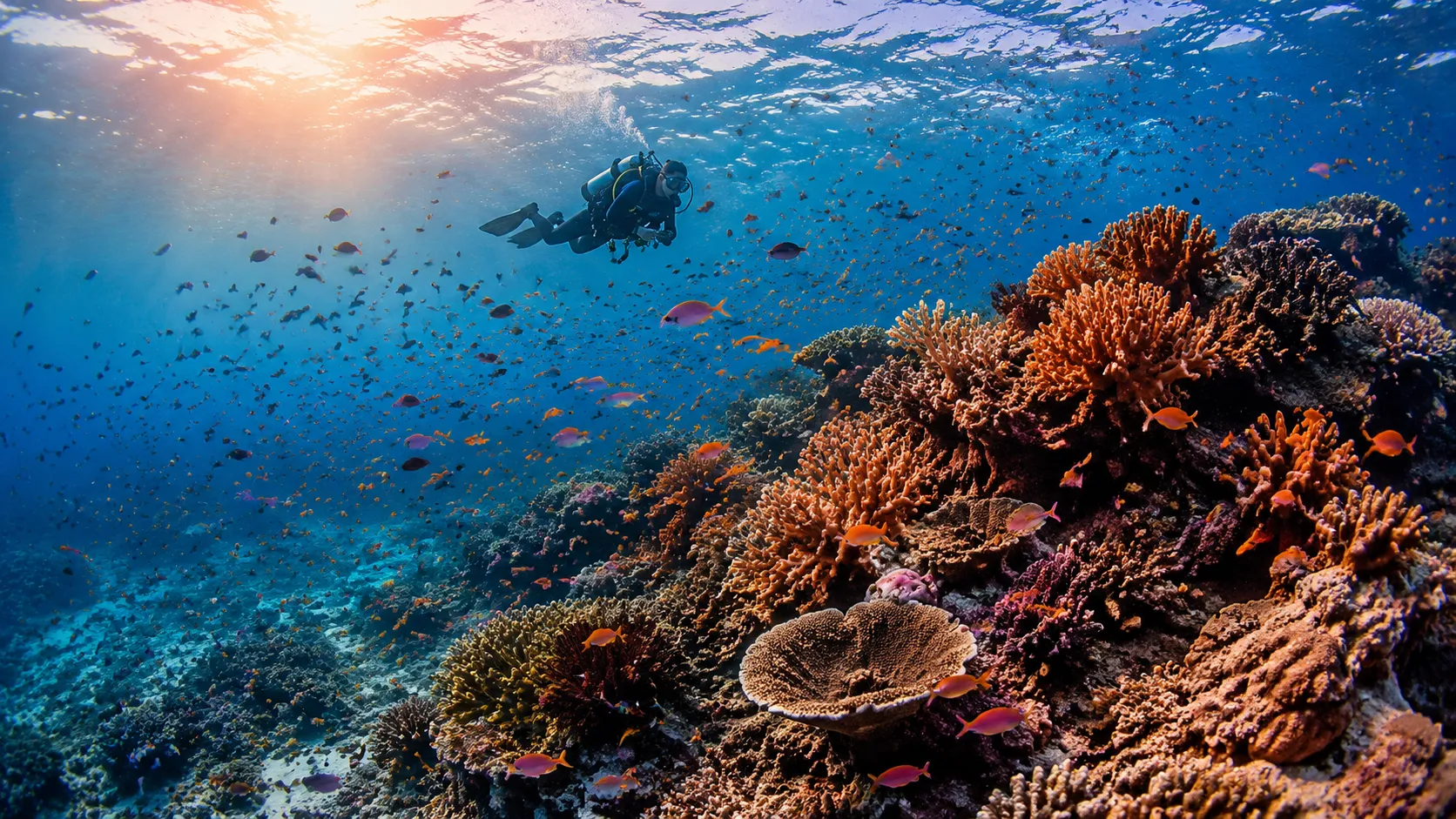
The epicenter of marine biodiversity - the Amazon of the seas
Image: Destination image
Visibility
30m
Water Temp
28C
Max Depth
40m
Current
Moderate to Strong
Difficulty
Intermediate
Best Season
Oct-Nov-Dec-Jan-Feb-Mar-Apr
Certification
advanced open water
Budget
$$$$ Luxury
Sharks
Manta Rays
Whale Sharks
Turtles
Coral
Macro
Pelagics
Dolphins
Depth: 5-35m | Intermediate
Record-breaking fish count site with massive schools of jacks, barracuda, and snapper swirling over pristine coral gardens.
Schooling fish, reef sharks, napoleon wrasse
Depth: 8-15m | Beginner
A sandy-bottomed cleaning station where manta rays glide overhead while cleaner wrasse attend to them.
Manta rays up close, easy conditions
Depth: 10-30m | Advanced
A seamount in the Dampier Strait where currents bring in pelagics including oceanic mantas, wobbegong sharks, and barracuda.
Oceanic mantas, wobbegongs, barracuda tornadoes
Depth: 5-30m | Intermediate
Stunning hard coral garden on a sloping reef with excellent visibility and an overwhelming variety of reef fish.
Pristine hard corals, colorful reef fish
Depth: 3-20m | Intermediate
A narrow channel connecting two bays with mangroves above and soft coral-covered walls below.
Unique topography, archerfish, soft corals
Raja Ampat is the standard by which all other diving is measured. Cape Kri holds the world record with 283 fish species recorded on a single dive. Melissa's Garden has hard coral coverage so dense it looks like an aerial photograph of a rainforest. The Passage — drifting through a mangrove-lined channel with archerfish spitting at insects above and soft coral walls below — is one of the most unique underwater topographies anywhere. It is remote and expensive, but for marine biodiversity, no destination comes close.
Best months: Oct, Nov, Dec, Jan, Feb, Mar, Apr. Peak: Dec-Jan-Feb. Water: 27-29C.
advanced open water certification recommended. Minimum 20+ dives.
$250/day average. luxury tier. Liveaboard: available.
Raja Ampat dives best from Oct, Nov, Dec, Jan, Feb, Mar, Apr, with the peak season running Dec to Jan to Feb. During these months you can expect the calmest seas, the clearest water, and the highest chance of encountering the marine life this destination is known for. Water temperature sits at 27-29C, so a 3mm wetsuit or skinsuit is all you need in the tropics.
For divers who are flexible, the shoulder months just outside peak season offer nearly identical conditions at 20-30% lower prices and with far fewer boats on the water. The only periods to avoid are the wet or cyclone windows - check the seasonal calendar below and on the dive operator websites before locking in flights.
Visibility at Raja Ampat averages 30 meters, which ranks among the clearest dive destinations in its ocean. Early morning dives consistently deliver the best visibility and the most active marine life, which is why local operators schedule most boat departures before 9am.
Getting there: Fly into Sorong (SOQ). From the airport, dive operators and hotels usually arrange transfers - budget 30 minutes to several hours depending on whether your resort or liveaboard is based on the mainland, an offshore island, or a distant atoll.
Time and money: The local timezone is UTC+9. A day of guided diving averages $250 at this $$$$ Luxury tier destination. Liveaboard safaris are available for multi-day trips to remote reefs.
Who this suits: With a Intermediate difficulty profile, a beginner-friendliness score of 2/5, and a minimum of 20 logged dives recommended, Raja Ampat is best suited to divers with some experience who are comfortable with its conditions. Consider it a dedicated diver destination rather than a family resort pick.